
Check the Jefferson County Owner-of-Record Card
The Jefferson County assessment roll is a present-tense snapshot. Each property gets one electronic record. It names the tax-facing owner alongside the identifiers needed to test a match, so read the full card instead of copying the first name shown.
| Owner Name/Address | The owner-of-record label and tax mailing destination |
|---|---|
| Appraiser's Parcel Number | The appraisal-system key for the tract |
| Tax Identifier | The link to the property's tax-facing account |
| Legal Description | The land description used for tax purposes |
| Special Assessments | Charges associated with the property record |
| Book/Page or deed clue | A lead to the recorded ownership instrument when displayed |
The roll never tells you who occupies the site. Its mailing address is where tax notices go, which may be far away. The situs pinpoints the land itself. Keeping those two address types separate prevents mix-ups when checking the current property owner; the Jefferson County parcel-information page shows how owner, situs, QuickRef, legal description, appraisal, tax, and sales fields sit together.
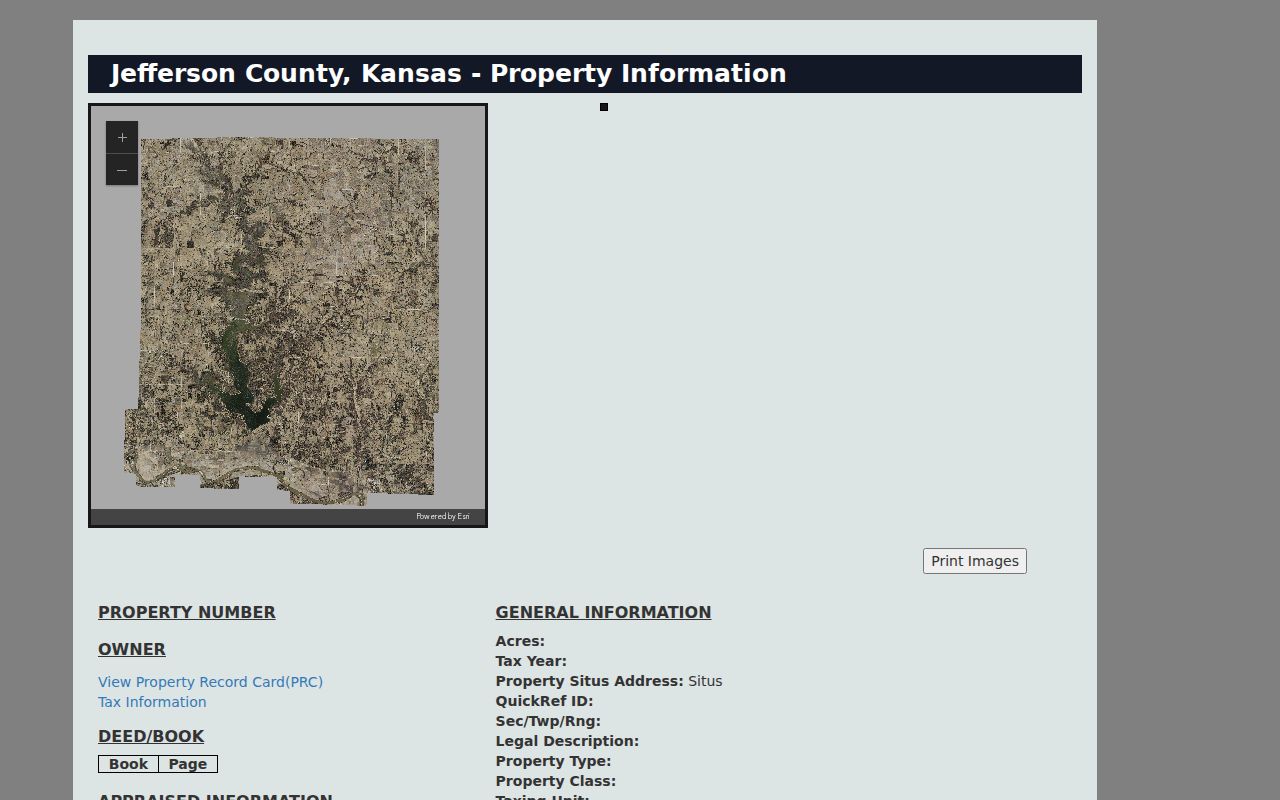
That grouping lets you test the match. A name on one card can be checked against the exact parcel rather than another person or a similar tract with a near-identical label.
Gauge How Current Jefferson County Owner Data Is
Jefferson County reports that transfers finished by August 31 appear on annual statements issued in November. That is a statement cutoff only. No fixed interval is published between a closing, the deed recording, and the assessment roll's owner change. For a recent sale, note the tax year. Record your check date too. Then search the Register of Deeds for a later conveyance, because a deed recorded after the roll's snapshot can reveal the newer owner first. The deed index cuts both ways. A name hit that never matches the parcel's legal description is simply not enough.
Recent-sale gap. The annual roll can lag a transfer. The newest recorded deed matching the same legal description is the more current ownership event.
Separate Jefferson County Situs and Mailing Addresses
The current owner may live on the parcel, get notices elsewhere, or hold it through an entity. The situs marks the physical tract. Owner Name/Address is the roll's mailing field. Neither substitutes for the other. Jefferson County geography adds a caution. A Perry, Oskaloosa, or Valley Falls mailing address can reach past the city limits or point to a rural or lake-area spot. Check QuickRef, taxing unit, and legal description first. Only then attach city jurisdiction or permit history to the owner record. Note: Kansas Safe at Home allows a substitute address in public records for qualifying participants, so a public mailing field may be protective by design.
Confirm the Current Jefferson County Owner
Confirming the current Jefferson County owner takes two records. Compare the assessment roll with the newest recorded transfer. The deed proves the event, the roll carries the administrative entry, and the legal description should be your primary join, with owner name serving as a search clue.
- Find the exact parcel through GIS and copy the QuickRef, parcel number, situs, and legal description.
- Read Owner Name/Address on the assessment roll and note the record or statement date.
- Search Jefferson County Land Records for that party as grantee and locate the latest matching deed.
- Compare grantee, recording date, instrument type, and legal description; preserve the book/page or control number.
- Owner of record
- The party associated with ownership in the current administrative or recorded land record.
- Assessment roll
- The annual county record of property, value, tax identifiers, and owner mailing information.
- Situs
- The physical property address, distinct from the owner's mailing destination.
- Recording lag
- The time between a transfer event and its appearance in another county system.
Verify the Jefferson County Owner in the Deed Index
The Register of Deeds name search covers Grantor-Seller, Grantee-Buyer, or Both. It adds pure-alpha and exact-match modes, optional name fields, date limits, and instrument filters. Start with the assessment-roll owner as grantee. Then inspect the newest deed candidate on the official Register of Deeds search screen. Match names carefully.
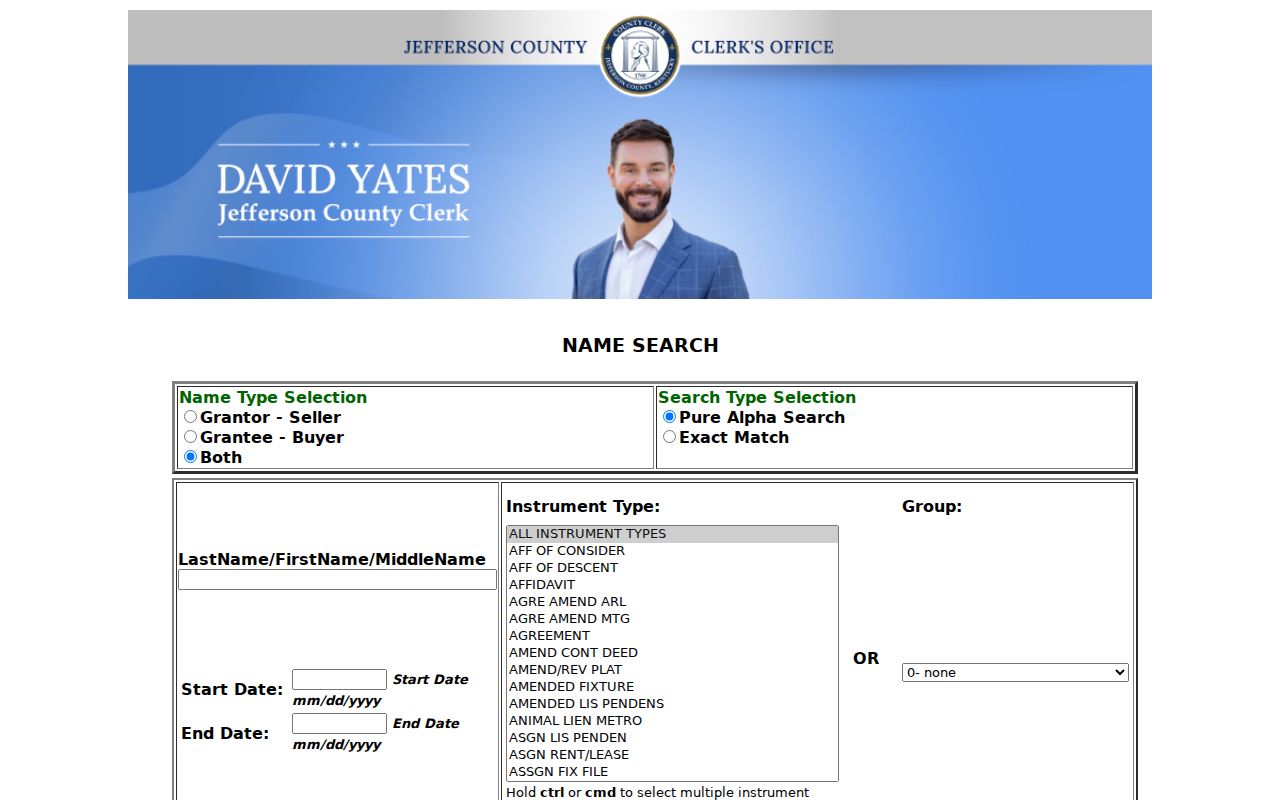
Party-role controls matter here. A current owner may resurface later as a mortgagor or grantor. Only the deed's legal description and grantee tell you whether a result covers the same parcel. Remote land-record information runs from 1995 onward. When the deed is not online, the Register of Deeds provides public terminals at 300 Jefferson Street in Oskaloosa, open Monday through Friday, 8:00 a.m. to 4:30 p.m. County staff, Laredo, and Tapestry offer other access.
Read a Jefferson County Entity Owner Correctly
An LLC, corporation, trust, or estate can be the current property owner, and you should copy its name exactly as written in the roll and deed. The Kansas business search can find an entity by name, Kansas Business ID, or current resident agent. It skips sole proprietorships, DBAs, and trade names. A resident agent takes legal service for a business. That role is not the landowner. A trust may name a trustee while keeping beneficiaries hidden. An estate may require a probate order and a later representative's deed. State entity data explains the named owner; the recorded parcel instrument still governs.
Monitor New Jefferson County Owner Filings
Jefferson County offers a free Property Fraud Alert. Enrolled users can be notified by email or phone when a name appears in a new recorded filing. The alert does not block recording, establish fraud, or decide whether an instrument affects a particular parcel. Treat it as a prompt, not a verdict.
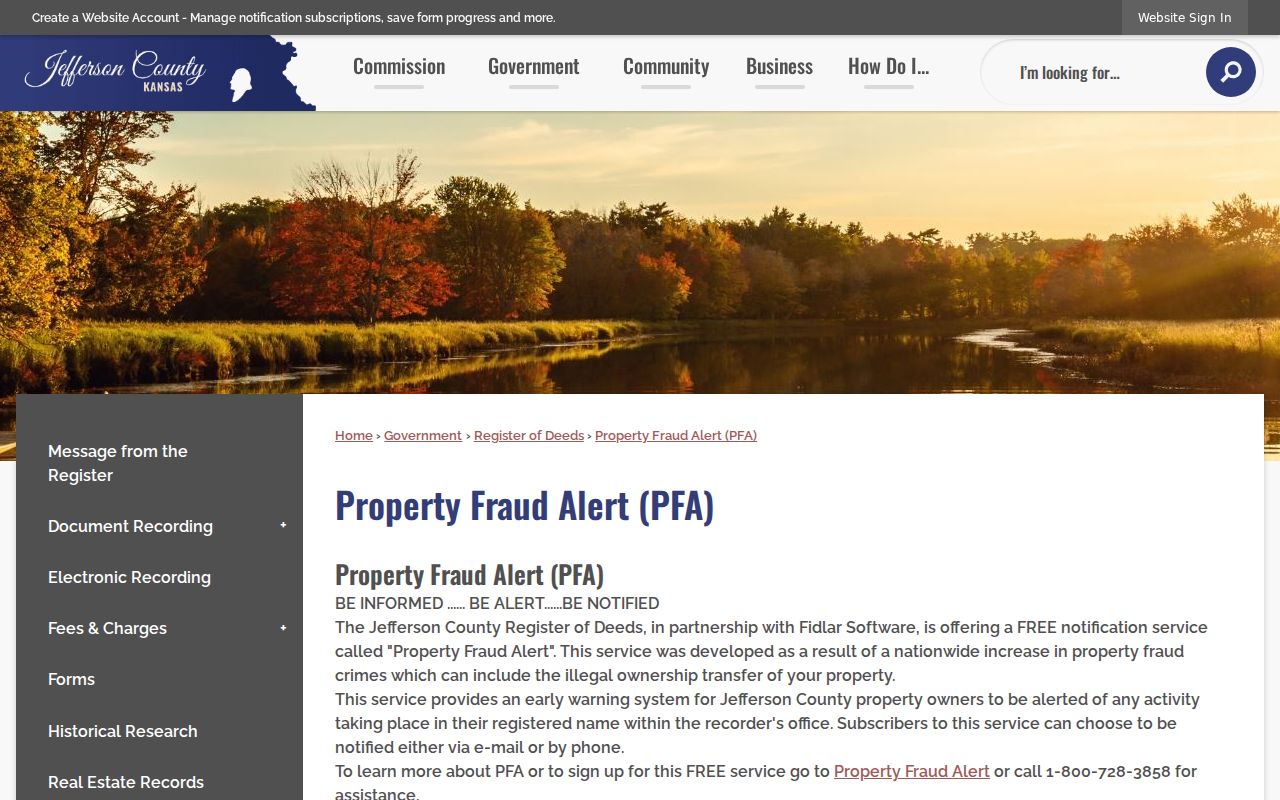
Let any alert prompt a closer look at the actual instrument with the Register of Deeds. Verify unexpected paid notices before sending money for a deed copy.
Get Jefferson County Current-Owner Records Offline
Don't guess when a parcel card or deed image won't load. Use the office channel. The County Appraiser takes roll and parcel record questions at 785-403-0000, extension 4. The Register of Deeds sits at 300 Jefferson Street in Oskaloosa. It offers public terminals and hours of 8:00 a.m. to 4:30 p.m. Monday through Friday.
Ask for the smallest record that settles the point. A parcel card for a named year works. So does the newest deed under a stated grantee. A certified copy works too. Name the book/page or control number. Jefferson County's published fee schedule includes $1 per page for photocopies and $13 for certification. It also lists $1 per section for fax or email delivery. Research beyond the first 15 minutes runs $15 per hour. Office payments run by check or cash under that schedule. Recheck it before ordering.
A Kansas Open Records Act request is a fallback for a focused, non-exempt county record. The agency must respond by the end of the third business day. It may give an estimated production date instead. It may request clarification. It may identify lawful grounds for withholding. It may also note that reasonable actual costs and prepayment apply.
Save a Dated Jefferson County Owner Audit
A defensible result records what each system showed, and when. Save the parcel number, QuickRef, situs, owner mailing field, legal description, roll year, deed recording date, instrument type, grantee, and recording locator. Note the evidence form too. It matters whether you relied on an index, an image, an office copy, or a certified copy.
This audit makes later changes easier to explain. An earlier roll may still name one party while a newer deed names another. Neither source is careless in that situation. The paper trail speaks for itself. The audit also keeps a screenshot from becoming the only citation after a portal layout changes.
Contact a Jefferson County Current Owner Lawfully
The roll's Owner Name/Address field is the official mailing clue for property correspondence. A concise letter works best. Identify the parcel and the property-related reason. Never infer an occupant's identity, publish sensitive personal details, or treat a protected substitute address as false information.
Lawful use. Current-owner records support purchase inquiries, easement questions, estate work, and civic review. They must never be used to stalk, harass, intimidate, or harm anyone.
A current owner lookup is not a title search. Competing interests, an unrecorded claim, or closing reliance matter. In those cases, get professional title work, and use the Jefferson County former owners guide to follow the ownership trail into earlier years.